
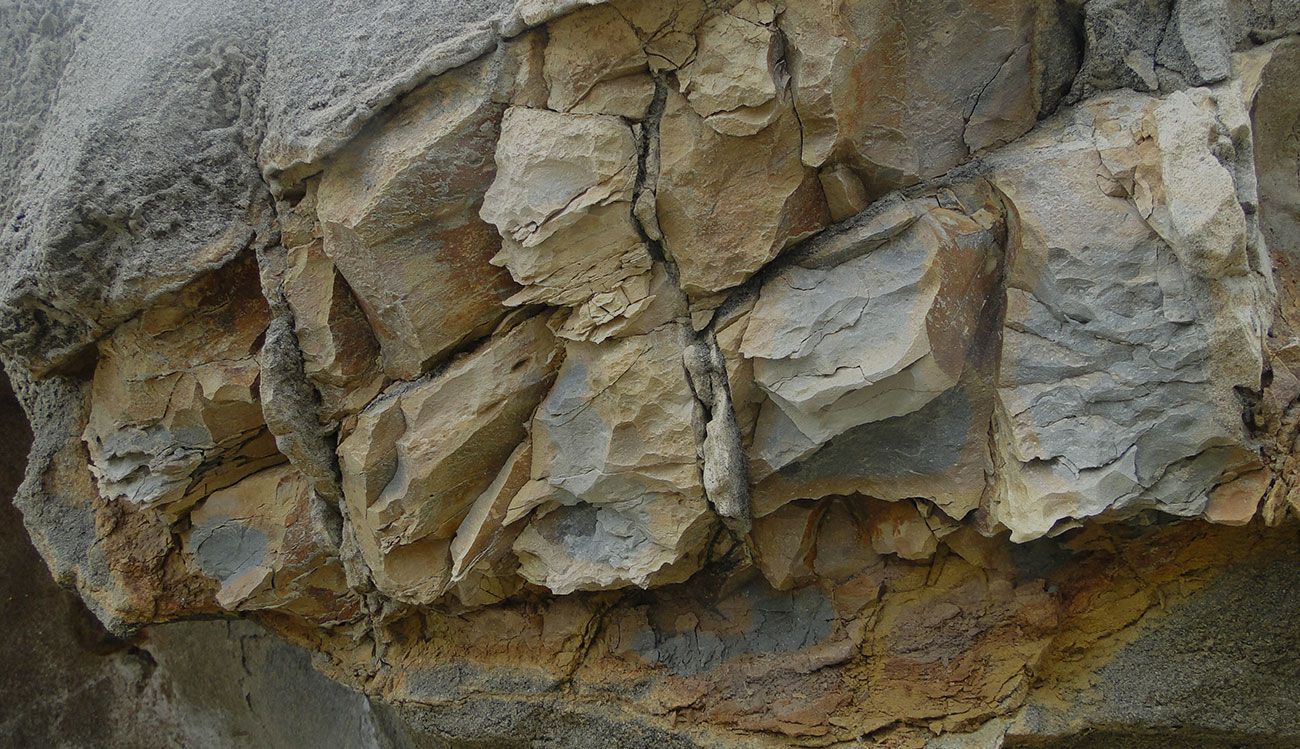

A geotechnical investigation (also called a soils investigation, subsurface investigation, or geotech report) is a formal study of the soil, bedrock, groundwater, and geologic conditions at a specific site. It is performed by a licensed geotechnical engineer or engineering geologist, typically involves drilling or excavating soil borings to collect samples, and results in a written report with engineering recommendations for foundation design, grading, drainage, and construction methods.
It is not an environmental investigation, a survey, or an appraisal. It is an engineering document that becomes part of the building permit application and informs every structural decision on the project.
The California Building Code (CBC) Chapter 18 governs foundation and soils requirements and broadly requires that a geotechnical report be prepared when the nature of the soil at the site is not well understood. Local jurisdictions — Los Angeles County, Orange County, San Diego, Riverside, and others — add their own requirements on top of the CBC, often requiring a soils report for any graded site, any site within a seismic hazard zone, or any site with slopes.
CEQA (California Environmental Quality Act) review frequently identifies geologic and soils conditions as environmental considerations requiring assessment. Sites within an Alquist-Priolo Earthquake Fault Zone require a fault investigation report by a licensed CEG (Certified Engineering Geologist) before any habitable structure can be approved.
The practical reality: if you are pulling a grading permit or building permit in California for almost any project, you will be asked for a geotechnical report. The question is whether you have one that meets the reviewing agency’s standard.
Beyond regulatory triggers, certain site characteristics should prompt an investigation regardless of what the permit office requires: visible cracking or displacement in existing pavement or structures; vegetation patterns inconsistent with surrounding properties (often indicating poor drainage or subsurface water); areas of soft or spongy ground; historical photographs showing fill operations; and proximity to drainages or erosion channels.
A standard geotechnical investigation for a California development project typically involves: a desktop study of available geologic maps, prior reports, and aerial photographs; field investigation with soil borings or test pits; collection of soil samples for laboratory testing; groundwater measurement if applicable; and preparation of a report that includes a site map, boring logs, laboratory test results, geologic description, and engineering recommendations for foundation type, bearing capacity, grading and compaction specifications, drainage, and seismicity.
For a standard residential or small commercial project in Southern California, a geotechnical investigation typically takes two to four weeks from contract to report delivery. Cost ranges from approximately $2,500 to $8,000 for standard projects, with more complex investigations — hillside sites, large commercial, or projects requiring fault investigations — ranging higher. These costs represent a small fraction of typical construction budgets and a significantly smaller cost than the delays, redesigns, or litigation that result from discovering a soils problem after construction has begun.
Not all geotechnical engineers have the same experience or jurisdictional familiarity. When selecting a geotechnical engineer for a California project, verify that the firm has: a licensed Geotechnical Engineer (GE) or Civil Engineer with geotechnical specialty registered in California; direct experience with the specific project type (residential, commercial, hillside, etc.); familiarity with the local jurisdiction and its plan check requirements; and an in-house laboratory capable of conducting required soil tests without subcontracting. A geotechnical engineer who has worked in the jurisdiction before will know the local plan checkers’ specific requirements and documentation preferences, which accelerates permitting.
G3 SoilWorks serves developers, contractors, architects, and property owners across Southern California from its Costa Mesa office, with staff engineers licensed as GE and CEG and an accredited in-house laboratory. Our experience spans more than 30 California jurisdictions, from standard residential investigations to complex hillside and large commercial projects.
Not universally, but it is required for virtually all projects that involve grading, slopes, or are located in seismic hazard zones — which describes the majority of California development. Local jurisdictions frequently require them even for projects where the CBC leaves it discretionary. When in doubt, check with your local building department.
They refer to the same document. “Geotechnical report,” “soils report,” “soil investigation report,” and “site investigation report” are all used interchangeably in California practice. The formal document is the geotechnical investigation report prepared by a licensed geotechnical engineer.
Standard investigations for residential or small commercial projects typically range from $2,500 to $8,000 in Southern California. More complex investigations — hillside sites, fault investigations, large commercial — can range from $10,000 to $30,000 or more. G3 SoilWorks provides project-specific proposals after an initial site consultation.
Possibly, but only if the scope of work hasn’t changed, the report is recent (typically within 5 years), and the original engineer is willing to reissue or update it for your project. Jurisdictions often require reports to be specifically addressed to the current owner or project.
Beyond permit denial, building without a required geotechnical investigation can result in stop-work orders, mandatory demolition of non-compliant work, financial liability for defects, and challenges in insurance and property sales. The absence of a geotechnical investigation is a significant legal exposure.
The most efficient geotechnical investigations are collaborative. Before the first boring is drilled, your engineer should understand the proposed structure type and loads, the planned grading and site preparation, any schedule constraints that affect reporting deadlines, and which jurisdiction is reviewing the permit. Share the site plan, preliminary architectural drawings, and any prior reports you have. A geotechnical engineer working from the full picture of the project produces recommendations that fit the actual design — reducing the rounds of follow-up comments that result when the engineer doesn’t know the project scope.
Equally important: budget the investigation properly. The most common cost overrun in geotechnical work is scope expansion — borings added when the initial drilling finds unexpected conditions, or additional laboratory tests required by the plan check reviewer. Discussing contingency scope with your engineer before fieldwork begins prevents the surprise of an added-scope invoice in the middle of design.
The geotechnical investigation is often described as the first investment of a construction project — and the one most likely to save money rather than spend it. Discovering that a site requires deep foundations, or that fill compaction must meet a higher standard, or that a fault setback affects your building envelope, is far less expensive before design than after. In California’s complex geologic environment, the investigation isn’t a formality — it’s the engineering foundation that every decision above ground is built on.
⟶ Request a Geotechnical Assessment
https://g3soilworks.com/services/geotechnical-engineering/
GET A PROPOSAL FOR YOUR PROJECT
https://docs.google.com/forms/d/e/1FAIpQLSdNCkQQ2Ys8-j4eDgKHp_hbwhAajop_4U7SXwEpyFv473-D5A/viewform
Follow, engage, learn. Stop by our blog to see what’s happening at G3SoilWorks.
G3Soilworks – a full service geotechnical/ engineering geologic consulting firm serving clients since 2009 and delivering expert solutions with our highly experienced team and specialized consultants.
G3SoilWorks
350 Fischer Avenue Costa Mesa, CA 92626
Tel. 714.668.5600
E. info@g3soilworks.com


