

California has more than 47,000 abandoned mine sites — the legacy of 175 years of mining activity from the Gold Rush through the mid-twentieth century. When development, ownership transfer, or regulatory action requires that these sites be reclaimed, the work involves a complexity of geotechnical, environmental, and regulatory challenges that few project teams fully anticipate at the outset.
The primary law governing mine reclamation in California is SMARA — the Surface Mining and Reclamation Act of 1975 (Public Resources Code §§ 2710–2796). SMARA requires that any surface mining operation prepare and submit a Reclamation Plan to the Lead Agency (typically a county or city), reviewed by the California Department of Conservation’s Division of Mine Reclamation (DMR).
The Reclamation Plan must describe how the mined land will be reclaimed to a usable condition and must include: a site map and description of existing conditions; proposed reclamation measures (grading, revegetation, drainage); a cost estimate for reclamation; and financial assurance in the amount of the estimated reclamation cost. In addition to SMARA, mine reclamation may involve the SWRCB, DTSC, and OSMRE for coal mines (rare in California).
Before reclamation design begins, the site must be characterized: existing landforms, slopes, drainage patterns, soil and rock conditions, groundwater, and any contamination must be identified. The preliminary assessment draws on available records and a site reconnaissance to define the scope of investigation needed.
The site investigation collects data needed for reclamation design: geotechnical borings or test pits; laboratory testing of fill and waste materials for bearing capacity, compaction potential, and geochemical characteristics; groundwater monitoring; and environmental sampling if contamination is suspected. Mine waste rock and tailings have highly variable geotechnical characteristics, and acid-generating potential must often be evaluated through geochemical testing.
Design translates site investigation findings into engineered plans for grading, drainage, erosion control, and revegetation. Geotechnical reclamation design addresses: stable final grades for all cut and fill slopes; drainage systems to manage surface runoff; containment or stabilization of acid-generating waste; foundation conditions for post-reclamation structures; and specifications for fill placement and compaction.
Implementation involves the physical work of reclaiming the site — grading, drainage installation, erosion control, and revegetation. Geotechnical quality control during implementation verifies that grading conforms to the reclamation plan, fill compaction meets specifications, and drainage systems are installed correctly.
Most reclamation plans require a monitoring period — typically three to five years — during which vegetation establishment, slope stability, and drainage performance are evaluated. When monitoring demonstrates that reclamation criteria have been met, the Lead Agency reviews the data and, if satisfied, releases the financial assurance bond. Achieving bond release in the minimum time possible is often a significant financial goal.
Mine waste materials — tailings, waste rock, and heap leach residue — have geochemical characteristics that must be evaluated before and during reclamation. The primary concern is acid mine drainage (AMD): when sulfide minerals in mine waste are exposed to oxygen and water, they oxidize to form sulfuric acid and dissolve heavy metals. AMD can contaminate surface water and groundwater and represents a significant regulatory liability.
G3 SoilWorks conducts acid-base accounting (ABA) tests and net acid generation (NAG) tests on mine waste samples to evaluate acid generation potential and determine whether reactive materials require encapsulation, neutralization, or other treatment as part of the reclamation design. Geochemical testing results directly influence the reclamation design — specifically the handling and placement of potentially acid-generating materials — and are typically required by the Lead Agency as part of the Reclamation Plan review.
The majority of active SMARA-regulated mining in Southern California involves aggregate extraction — sand, gravel, and crushed rock from river channels and hillside quarries. These operations are concentrated in the Mojave Desert, the San Bernardino and Riverside County mountain foothills, and the Antelope Valley. When aggregate mining operations close or reduce production, SMARA reclamation obligations become active even if the operation has not formally closed — annual mining reports and financial assurance reviews can trigger Lead Agency enforcement of reclamation plan compliance.
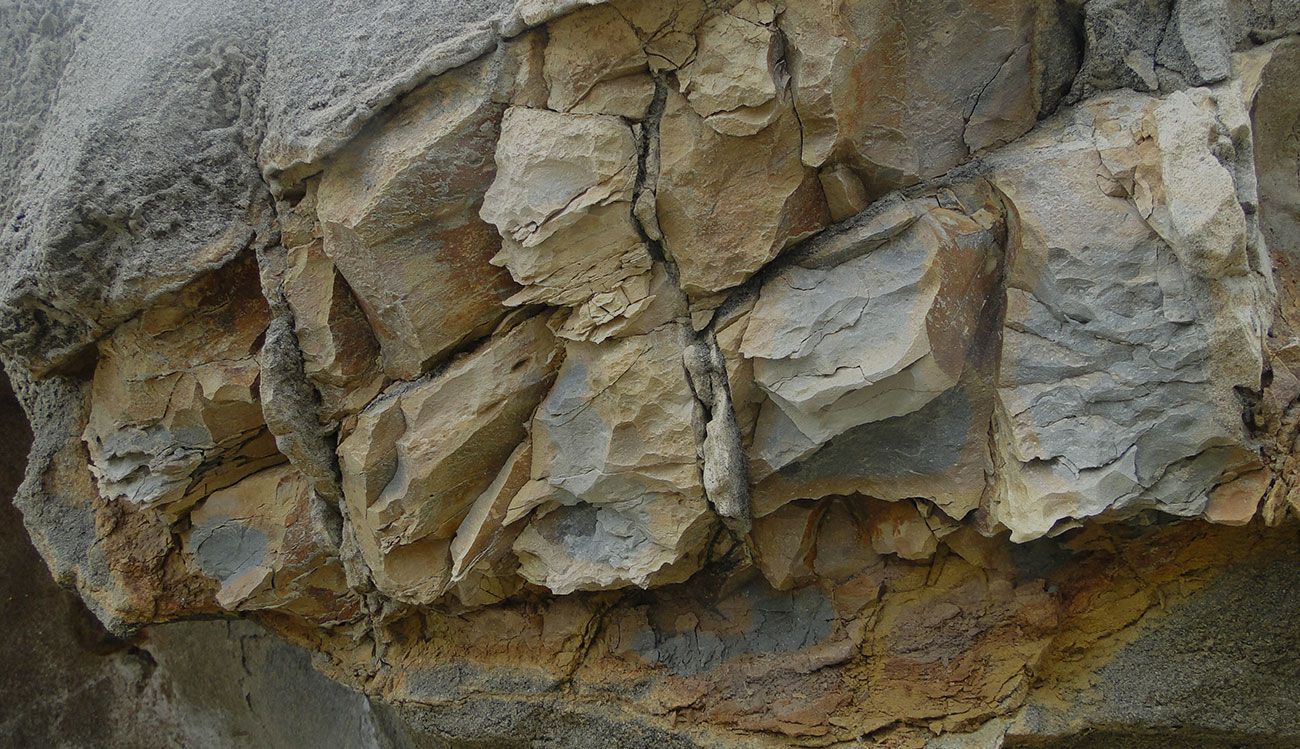
Aggregate mine reclamation presents specific geotechnical challenges related to the final landform. Quarry high walls — the vertical or near-vertical faces left by open-pit mining — must either be stabilized in place or excavated to a safe angle. The stability analysis for quarry high walls depends on the rock type, joint orientation, and the presence of groundwater in the rock mass — a distinctly different problem from soil slope stability. G3 SoilWorks conducts rock mass characterization and discontinuity analysis for quarry high wall stability assessment, providing the geotechnical basis for reclamation grade designs that meet both SMARA safety criteria and Lead Agency slope requirements.
SMARA requires that mine operators post financial assurance — a bond, letter of credit, or trust fund — in an amount equal to the estimated cost of reclamation. The financial assurance calculation must cover all components of reclamation: mobilization, earthwork, drainage construction, revegetation, and monitoring. It must be based on unit costs for the specific work required, not general industry averages, and must be updated periodically as conditions change. Underestimating the financial assurance amount is a regulatory violation; overestimating it ties up capital unnecessarily.
G3 SoilWorks prepares financial assurance cost estimates that are defensible under regulatory scrutiny — based on current contractor pricing for the specific work scope, geotechnical characterization of the materials that must be moved, and realistic monitoring program costs. When operators seek to reduce an existing financial assurance requirement — by demonstrating that previously assumed conditions are less severe than estimated — we conduct the targeted investigation needed to support the recalculation with actual data rather than conservative assumptions.
Revegetation is often the final and most uncertain phase of mine reclamation. Regulatory criteria for bond release typically require that vegetation cover reach a specified percentage and that slopes remain stable through the monitoring period. In Southern California’s semi-arid environment, establishing adequate vegetation on reclaimed mine slopes requires soil amendments, appropriate species selection, and careful attention to irrigation during establishment. Geotechnically, the transition from bare disturbed slope to vegetated slope is a period of changing stability conditions — root systems increase slope cohesion, but the period before vegetation establishes is often the most erosion-vulnerable. G3 SoilWorks’ reclamation engineers design slope geometries and erosion control programs that manage this transition period while achieving the vegetation criteria needed for regulatory sign-off.
Mine reclamation projects that proceed without adequate geotechnical characterization at the outset consistently encounter surprises during implementation — unexpected materials, slope stability issues, drainage problems, or geochemical conditions requiring design changes. Each surprise generates additional cost and schedule delay. The projects that achieve bond release most efficiently invest adequately in site investigation upfront, so that the reclamation design is based on what is actually there.
⟶ Consult with G3’s Reclamation Team
https://g3soilworks.com/services/resource-and-reclamation/
📋 GET A PROPOSAL FOR YOUR PROJECT
https://docs.google.com/forms/d/e/1FAIpQLSdNCkQQ2Ys8-j4eDgKHp_hbwhAajop_4U7SXwEpyFv473-D5A/viewform
SMARA (Surface Mining and Reclamation Act of 1975) requires that all surface mining operations prepare and submit a Reclamation Plan to the Lead Agency, post financial assurance for the estimated cost of reclamation, and implement reclamation in accordance with the approved plan. SMARA is administered by local lead agencies with oversight from the California Department of Conservation’s Division of Mine Reclamation.
A SMARA-compliant Reclamation Plan includes: a description of existing site conditions; proposed reclamation measures (grading, drainage, revegetation, erosion control); a site map showing proposed final grades; cost estimates for reclamation; and financial assurance documentation.
Timeline varies enormously with site size and complexity. Simple, small-scale operations may be reclaimed and achieve bond release in three to five years. Complex metal mine sites with contamination and large waste rock volumes may require ten to twenty or more years. The monitoring period required by most reclamation plans is typically three to five years after construction completion.
Required assessments depend on the site characteristics but typically include: geotechnical borings and testing to characterize mine waste and native soils; geochemical testing of waste materials for acid generation potential; groundwater monitoring; slope stability analysis for proposed reclamation grades; and drainage design.
Follow, engage, learn. Stop by our blog to see what’s happening at G3SoilWorks.
G3Soilworks – a full service geotechnical/ engineering geologic consulting firm serving clients since 2009 and delivering expert solutions with our highly experienced team and specialized consultants.
G3SoilWorks
350 Fischer Avenue Costa Mesa, CA 92626
Tel. 714.668.5600
E. info@g3soilworks.com


